Standards Upgraded, Testing Moves Toward “High Precision”:
How ABD Driving Robots + Guided Soft Target Platforms and DRI Targets Enable Compliance
On December 31, 2025, the mandatory national standard GB 39901-2025 Technical Requirements and Test Methods for Advanced Emergency Braking Systems of Light Vehicles, proposed and organized by the Ministry of Industry and Information Technology, was officially released and will be fully implemented on January 1, 2028.
This marks a significant shift of AEB systems from “optional” to “standard configuration” and represents China’s first mandatory national standard in the field of advanced driver assistance systems (ADAS).
Upgraded from the previous recommended standard GB/T 39901-2021, the new regulation expands its scope from M1 passenger vehicles to both M1 and N1 light vehicles (including pickup trucks and light-duty trucks with a gross vehicle mass ≤ 3.5 tons). For OEMs and testing organizations, the countdown to 2028 has already begun—testing and validation systems must be prepared in advance.
Three Key Changes Introduced by GB 39901-2025
1. Significantly Expanded Test Scenarios with Increased Complexity
The number of typical test scenarios has doubled from 3 to 6, while false response scenarios have increased from 2 to 5. New vulnerable road user (VRU) targets—such as child pedestrians, straddling bicycles, and powered two-wheelers—are now included for collision warning and AEB testing.
2. Stricter Performance Requirements and Higher Repeatability Standards
For example, when approaching a stationary target at speeds up to 35 km/h, the vehicle must successfully trigger AEB and stop or significantly reduce speed. In pedestrian crossing scenarios, test speeds can reach up to 40 km/h.
In addition, the standard requires a pass rate of ≥90% under repeated test conditions, placing extremely high demands on test repeatability and data consistency.
3. Clearly Defined Requirements for Test Targets
A dedicated section has been added specifying requirements for test targets, including radar cross section (RCS) and visual characteristics. This means AEB testing can no longer rely on simple foam props or non-standard targets—high-fidelity targets that meet regulatory specifications are now mandatory.
Addressing the Challenges of the New Standard
To tackle the challenges introduced by the upgraded regulation, Zeer Testing leverages AB Dynamics (ABD) high-precision driving robots, guided soft target platforms, and Dynamic Research Inc. (DRI) high-fidelity soft targets to provide a one-stop compliance solution—from equipment selection to scenario implementation.
ABD Driving Robots + Guided Soft Target Platforms:
A Complete Solution for Precision and Dynamic Scenarios
The new standard sets a ≥90% repeatability pass rate and introduces complex dynamic VRU scenarios such as child pedestrians, bicycles, and motorcycles crossing. This requires both vehicle trajectory accuracy and target motion accuracy to be tightly controlled.
High-Precision Control for Both Vehicle and Target
With path tracking accuracy of <2 cm and speed error <0.5 km/h, ABD driving robots utilize advanced trajectory-following algorithms to precisely control the test vehicle.
The guided soft target platforms adopt the same technology, achieving a typical accuracy of 2 cm. Through the Synchro system, both systems operate with millisecond-level synchronization, ensuring precise timing in vehicle–target interactions.
Full Coverage of M1/N1 Vehicles and All VRU Scenarios
Vehicle side: ABD pedal and steering robots are compatible with both passenger cars and light commercial vehicles, fully aligning with the expanded scope of the standard.
Target platform side: The GST series supports a full speed range—from low to high speed testing.
GST 120 Plus reaches up to 130 km/h, meeting Euro NCAP 2026 high-speed rear-end scenarios
LaunchPad 80 supports up to 80 km/h, ideal for motorcycle AEB testing
LaunchPad 50/60 are optimized for low-speed urban scenarios such as pedestrians and bicycles
Ideal for False Response Testing: Safe and Repeatable
For the five newly added false response scenarios, driving robots can precisely reproduce complex maneuvers such as “following then turning right” or “oncoming bicycle interactions.”
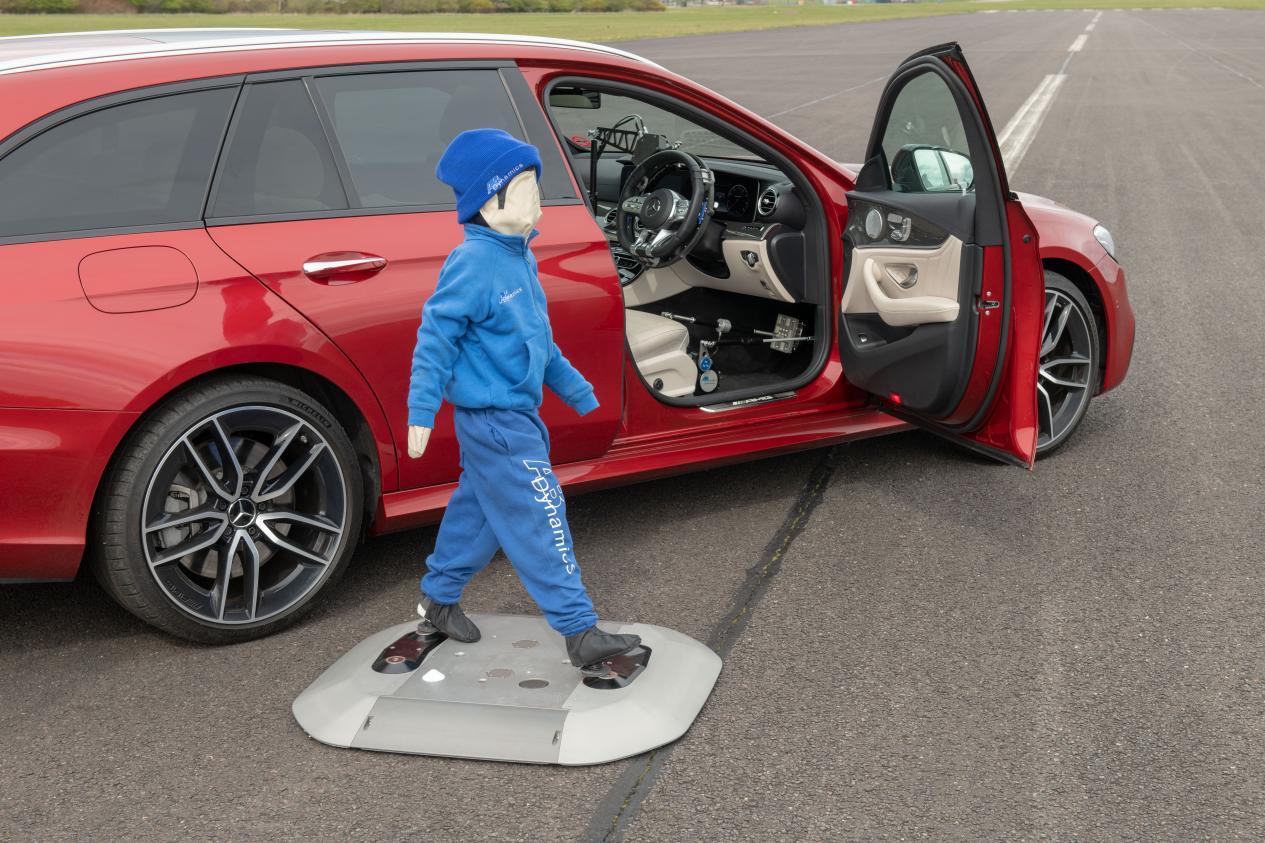
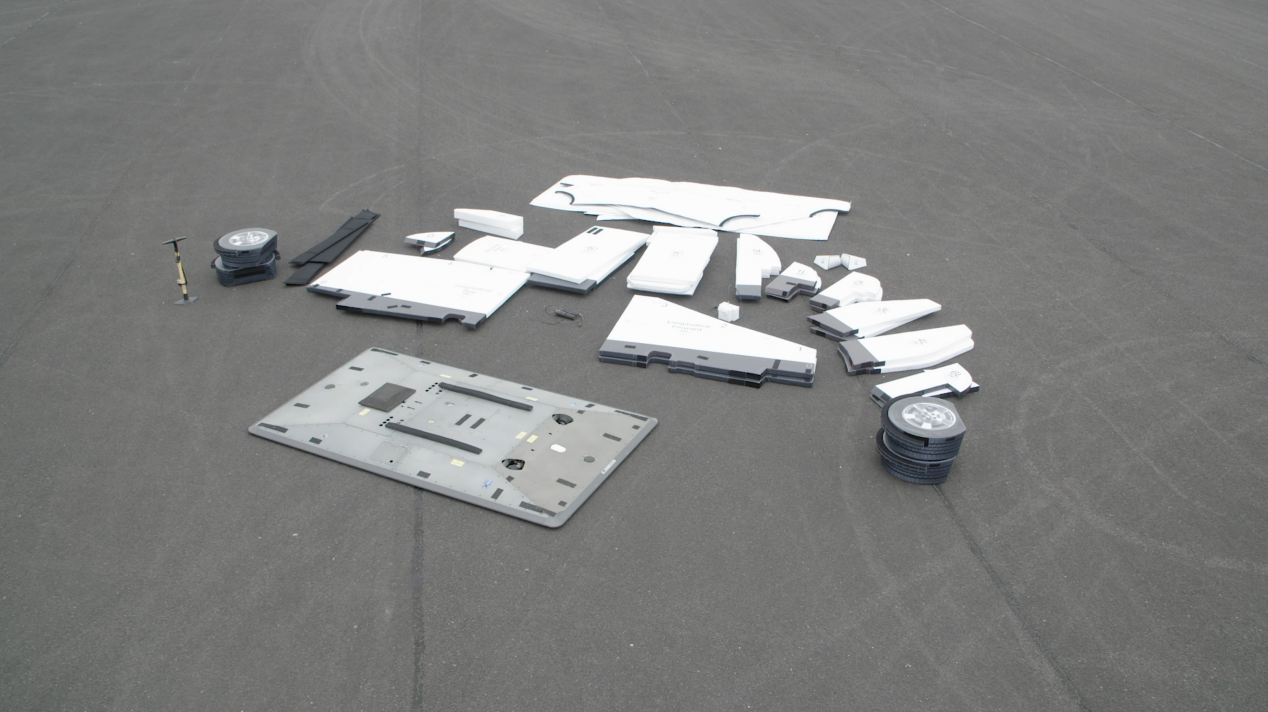
GST and LaunchPad platforms carry DRI soft targets for crossing scenarios, with targets safely detaching upon impact to prevent damage to both vehicle and platform. All platforms are designed for high-frequency, all-weather testing, ensuring consistent conditions and enabling easy compliance with the ≥90% pass rate requirement.
DRI Soft Targets: Meeting New VRU Target Requirements
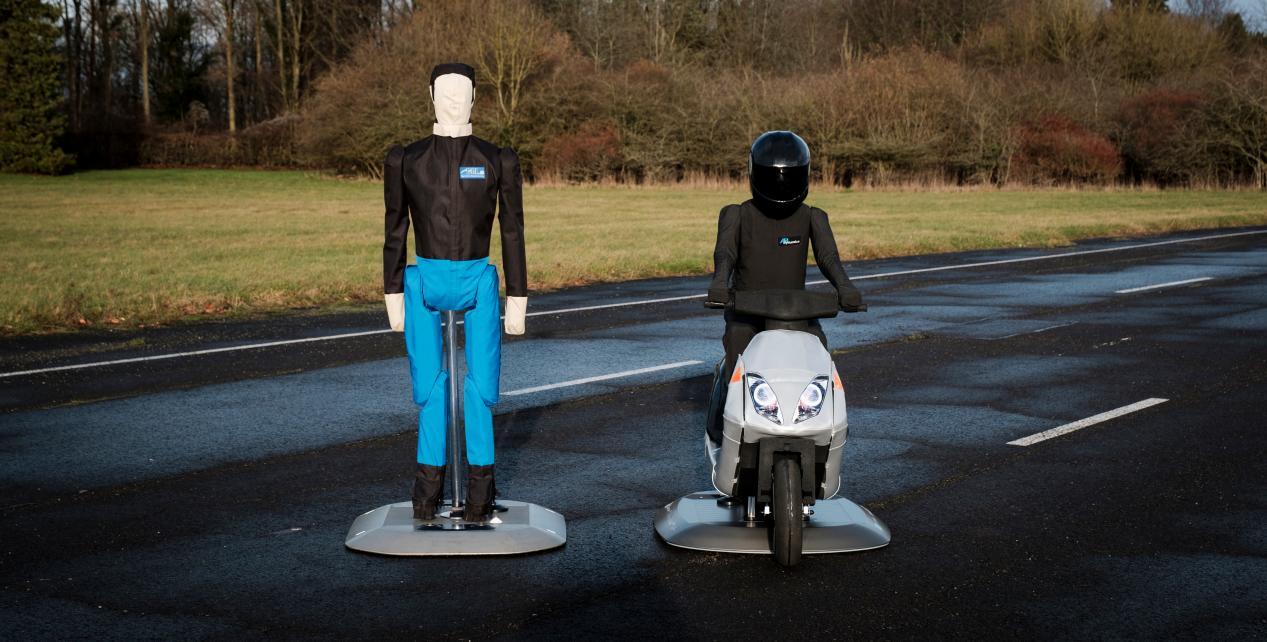
The updated standard introduces three new VRU target categories—child pedestrians, bicycles, and powered two-wheelers—with clearly defined technical requirements.
Comprehensive VRU Target Portfolio
DRI offers a full range of ADAS soft targets, including Soft Pedestrian 360 and Soft Bicycle 360, covering all VRU scenarios introduced in GB 39901-2025.
The Soft Bicycle 360 is 30% lighter than comparable products, while maintaining structural rigidity and reducing potential damage to test vehicles.
High-Fidelity Sensor Representation
DRI targets are designed in accordance with international standards such as ISO 19206, featuring realistic radar cross sections (RCS) and visual textures. This ensures that AEB sensors receive data consistent with real-world driving environments.
Durability for Cost Efficiency
The Soft Car 360 target can withstand repeated impacts at speeds up to 62 mph (approximately 100 km/h) without structural damage, significantly reducing replacement costs during high-intensity AEB testing.

Zeer Testing: Your End-to-End Compliance Partner
With years of expertise in automotive testing, Zeer Testing holds core distribution rights for major global brands such as ABD and DRI, supported by a professional technical team.
From high-precision control using ABD driving robots and guided soft target platforms to DRI soft targets, we provide full lifecycle services including:
equipment configuration, scenario setup, personnel training, and regulatory interpretation—helping industry users efficiently achieve compliance under the new standard.